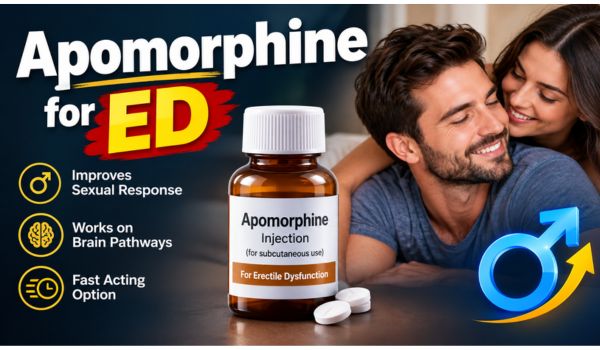
Apomorphine for ED (✨ED SUPPORT!) Learn how it works, potential benefits, side effects, safety tips, and other treatment options.

Erectile dysfunction, commonly called ED, is a condition that can make it difficult to get or maintain an erection firm enough for sexual activity. It can happen occasionally, but when it becomes persistent, it may affect confidence, relationships, and overall quality of life.
There are several treatment options for ED, including lifestyle changes, prescription medications, devices, and other medical therapies. Most people are familiar with medicines such as sildenafil and tadalafil, but there are other approaches that work differently.
One of them is apomorphine for ED.
Apomorphine is a medication that affects dopamine receptors in the brain. Unlike traditional ED medicines that mainly work by improving blood flow in the penis, apomorphine works through the nervous system to help stimulate the signals involved in sexual arousal and erection.
So, does apomorphine work for erectile dysfunction? How quickly does it work, and what side effects should you know about?
Let’s take a closer look.
What Is Apomorphine?
Apomorphine is a dopamine agonist, meaning that it stimulates certain dopamine receptors in the nervous system. Although its name contains the word “morphine,” apomorphine is not an opioid painkiller and does not work like morphine.
The medication has been used in medical settings for neurological conditions, particularly Parkinson’s disease. Researchers also discovered that stimulating certain dopamine pathways could influence sexual behavior and erectile responses.
This led to the development and study of apomorphine as a treatment for erectile dysfunction.
For ED, researchers have investigated apomorphine primarily in a sublingual form. Sublingual means the medication is placed underneath the tongue, where it can be absorbed through the tissues in the mouth.
The goal of this approach is to stimulate the central nervous system pathways involved in producing an erection.
How Does Apomorphine for ED Work?
An erection is a complex process involving the brain, nerves, hormones, blood vessels, and penile tissue. Sexual stimulation begins a series of signals that eventually increase blood flow to the penis and allow an erection to develop.
Apomorphine acts early of this process.
It stimulates dopamine receptors in areas of the brain involved in sexual arousal and erectile function. By activating these pathways, apomorphine may help encourage the neurological signals needed to initiate an erection.
This makes apomorphine different from commonly prescribed PDE5 inhibitors.
Medications such as sildenafil and tadalafil primarily work in the penile tissues by enhancing the effects of nitric oxide signaling. This helps relax blood vessels and support the increased blood flow required for an erection.
Apomorphine, on the other hand, acts primarily through the central nervous system.
This difference is one reason researchers have been interested in apomorphine as an alternative approach to ED.
However, a different mechanism does not necessarily mean a more effective treatment. The response to apomorphine varies between individuals, and it has generally not become as widely used for ED as PDE5 inhibitor medications.
Does Apomorphine Work for Erectile Dysfunction?
Research has shown that apomorphine can help some men with erectile dysfunction achieve an erection.
Its effects appear to be particularly relevant to men whose ED is mild to moderate. However, not everyone responds to the medication, and the degree of improvement can vary.
Apomorphine is also not an aphrodisiac in the traditional sense. It does not simply create sexual desire or automatically produce an erection.
Sexual stimulation is still important. The medication is intended to support the body’s natural erectile response by influencing neurological pathways involved in arousal and erection.
For some men, this may provide an alternative when other treatments are unsuitable or ineffective. For others, conventional ED treatments may provide a stronger or more reliable response.
This is why choosing an ED treatment should involve consideration of the individual’s health, medications, underlying cause of ED, and treatment history.
How Quickly Does Apomorphine Work?
One of the reasons apomorphine has attracted attention is its relatively rapid onset when used in an appropriate sublingual formulation.
Some men may experience an erectile response within several minutes, while others may take longer. The exact timing depends on factors such as dosage, individual metabolism, sexual stimulation, overall health, and the underlying cause of erectile dysfunction.
Medication response is not identical for everyone. A medicine that works quickly for one person may work more slowly or less effectively for another.
Apomorphine should therefore be used according to medical instructions rather than increasing the amount in an attempt to produce faster results.
Apomorphine vs. Viagra
When people research apomorphine for ED, one of the most common comparisons is with Viagra, the well-known brand name for sildenafil.
The two medications work differently.
Apomorphine primarily influences dopamine-related pathways in the brain that are involved in sexual arousal and erection.
Sildenafil works primarily by supporting blood-flow mechanisms in penile tissue. It belongs to a group of medicines called PDE5 inhibitors.
Both approaches ultimately aim to make it easier to achieve and maintain an erection, but they do so through different biological pathways.
For many men, PDE5 inhibitors are more commonly used because of their established effectiveness and widespread clinical experience.
Apomorphine may still be relevant in certain situations, but it should not be assumed to be a better or stronger alternative. A healthcare professional can help determine the right approach based on an individual’s health and medical history.
Apomorphine vs. Tadalafil
Tadalafil is another widely used PDE5 inhibitor.
One major difference between tadalafil and apomorphine is how long their effects may last. Tadalafil is known for having a relatively long duration of action, while apomorphine is generally considered an on-demand treatment.
Their mechanisms are also different. Tadalafil works mainly by enhancing blood-flow signaling in penile tissue. Apomorphine acts on dopamine pathways within the central nervous system.
The best choice depends on the individual’s needs and response to treatment.
Someone who does not respond adequately to one medication may sometimes have other treatment options available, but changing or combining ED medications should be discussed with a healthcare professional.
Potential Benefits of Apomorphine for ED
Apomorphine may offer several potential advantages for certain men with erectile dysfunction.
- Works through a different mechanism – Apomorphine acts on dopamine-related pathways rather than directly targeting the same mechanism used by PDE5 inhibitors.
- May have a relatively rapid onset – Sublingual formulations were developed for on-demand use and may begin working relatively quickly in some individuals.
- May help men with certain types of ED – Because it works through the central nervous system, apomorphine may be useful in selected men where neurological and arousal-related pathways play an important role.
- Does not require daily use in every situation – When prescribed as an on-demand treatment, it may be taken only when needed rather than necessarily every day.
- Provides another treatment option – ED does not have a single treatment that works equally well for everyone. Having different mechanisms available can be valuable when standard options are not suitable.
Apomorphine Side Effects
Like all medications, apomorphine can cause side effects.
Some of the more commonly reported side effects include:
- Nausea
- Dizziness
- Headache
- Yawning
- Drowsiness
- Lightheadedness
- Low blood pressure
Nausea and dizziness can be especially noticeable in some people.
Because apomorphine can affect blood pressure and the nervous system, use it carefully. Men who already experience low blood pressure or take medications that lower blood pressure should speak with a healthcare professional before using it.
Side effects may also depend on the dose. Taking more than prescribed does not necessarily improve erectile function and may increase the likelihood of unwanted reactions.
Can Apomorphine Cause Low Blood Pressure?
Yes, apomorphine can lower blood pressure.
This may result in dizziness, lightheadedness, or weakness, particularly when standing up. This is an important consideration for people taking medications that also lower blood pressure.
If you experience significant dizziness, fainting, or other concerning symptoms after taking a medication, seek medical advice rather than taking another dose.
Who Should Avoid or Be Careful With Apomorphine?
Apomorphine is not appropriate for everyone.
Extra caution may be necessary for men who:
- Have low blood pressure
- Have a history of fainting
- Take blood-pressure medications
- Take medications that affect dopamine
- Have significant cardiovascular problems
- Have neurological conditions
- Take several prescription medications
- Have unexplained or recently developed ED
A doctor should review your medications and medical history before determining whether apomorphine is appropriate.
This is especially important because ED can sometimes be a sign of another health problem.
What Causes Erectile Dysfunction?
Understanding the underlying cause of ED is often more important than simply choosing a medication. Erectile dysfunction can result from physical, psychological, or lifestyle-related factors.
Common contributors include:
Cardiovascular problems – Healthy blood vessels are essential for normal erections. Conditions affecting circulation can make it more difficult for sufficient blood to reach the penis.
- Diabetes – High blood sugar can damage blood vessels and nerves involved in erectile function.
- High blood pressure – Long-term high blood pressure can affect blood-vessel health and contribute to ED.
- Hormonal changes – Low testosterone and other hormonal problems may affect sexual desire and erectile function.
- Certain medications – Some prescription medications can contribute to erectile difficulties as a side effect.
- Stress and anxiety – Psychological factors can interfere with sexual arousal and make it difficult to achieve or maintain an erection.
- Lack of sleep – Poor sleep can affect energy, mood, hormones, and sexual health.
- Smoking and excessive alcohol – Smoking can damage blood vessels, while heavy alcohol use can interfere with nervous-system function and sexual performance.
Because ED can have multiple causes, treating the underlying problem can be an important part of long-term improvement.
Is Apomorphine a Natural Treatment for ED?
No. Apomorphine is a medication, not a natural supplement.
Although it may be derived from compounds related to plant chemistry during manufacturing, pharmaceutical apomorphine is a regulated medication and should not be confused with herbal sexual-enhancement products.
Products marketed online as “natural apomorphine” or as alternatives to prescription ED medications may not contain what they claim.
Anyone considering treatment for ED should be cautious about purchasing unverified sexual-enhancement products online.
Can Apomorphine Be Taken With Other ED Medications?
Men should not combine apomorphine with sildenafil, tadalafil, or other ED treatments without medical guidance. Although medications may work through different mechanisms, combining them can potentially increase unwanted effects, including effects on blood pressure.
Your healthcare professional can determine whether different treatments can safely be used together. Do not increase the dose or combine medications simply because one treatment does not appear to be working quickly enough.
When Should You See a Doctor About ED?
Occasional difficulty getting an erection is not necessarily a sign of a serious medical problem.
However, persistent or recurring ED deserves attention.
You should consider talking with a healthcare professional if:
- ED continues for several weeks or months
- Your symptoms are becoming worse
- You regularly struggle to maintain an erection
- Your sex drive has changed significantly
- ED began suddenly
- You have diabetes, high blood pressure, or cardiovascular risk factors
- You recently started a new medication
- ED is causing significant stress or relationship problems
A medical evaluation can help identify possible underlying causes and determine appropriate treatment options.
Final Thoughts on Apomorphine for ED
Apomorphine for ED represents a different approach to treating erectile dysfunction. Instead of primarily targeting blood flow in penile tissue, it works through dopamine-related pathways in the brain that are involved in sexual arousal and erection.
Research has shown that it can help some men achieve an erection, particularly when used in an appropriate formulation and under medical guidance. However, it is not a universal solution, and its effectiveness can vary considerably.
For many men, established ED treatments such as PDE5 inhibitors may remain more appropriate. For others, a different treatment strategy may be worth considering.
The most important step is to understand why erectile dysfunction is happening in the first place. ED can sometimes be connected to cardiovascular health, diabetes, medications, hormonal changes, stress, or other underlying concerns.
If you are experiencing persistent erectile difficulties, speak with a qualified healthcare professional. With the right evaluation, you can identify the potential cause and choose an evidence-based approach that fits your health, needs, and lifestyle.
.
About the Author