Immediate Constipation Relief at Home – (FAST NATURAL RELIEF!) Discover 12 home methods, foods, and drinks for faster constipation support.

Fast, Natural Relief for Constipation — At Home
The problem: Constipation is one of the most common digestive complaints, presenting as hard stools, bloating, abdominal pressure, and difficulty passing stool. When it strikes suddenly, most people just want fast, simple relief.
Why it happens: Occasional constipation is usually tied to everyday triggers, such as:
- Not drinking enough water
- Too little fiber in the diet
- Reduced physical activity
- Stress or travel
- Disruptions to your normal routine
The approach: Home remedies work by supporting the body’s natural digestive rhythm — not forcing it:
- Drinking more fluids
- Adding fiber-rich foods
- Staying physically active
- Building healthy bathroom habits
A quick note: Relief isn’t one-size-fits-all. What works fast for one person may take longer for someone else. The goal is lasting digestive health, not just quick comfort.
What’s ahead: This guide covers 12 natural methods for immediate at-home relief of constipation.
What Is Constipation?
Constipation happens when bowel movements become less frequent or more difficult to pass. A person may experience constipation when stool becomes dry and hard or requires extra effort to pass.
Common signs of constipation include:
- Fewer bowel movements than usual
- Hard or lumpy stool
- Straining during bowel movements
- Feeling that stool has not fully passed
- Abdominal discomfort or bloating
Bowel habits vary between individuals. Some people naturally have bowel movements several times daily, while others may go every few days.
🚫Common Causes of Constipation
Understanding what causes constipation can help you choose the right approach for relief.
Low Fiber Intake
Fiber helps add structure and softness to stool. Diets low in fruits, vegetables, whole grains, and legumes may make bowel movements more difficult.
Dehydration
The digestive system needs enough fluid to maintain normal stool consistency. When the body lacks water, stool may become harder and slower to pass.
Lack of Physical Activity
Movement helps support natural intestinal activity. Long periods of sitting or inactivity may contribute to slower digestion.
Ignoring Bathroom Urges
Regularly delaying the urge to use the bathroom may cause stool to remain in the colon longer, allowing more water to be absorbed.
Changes in Routine
Travel, stress, schedule changes, and dietary changes can temporarily affect digestion.
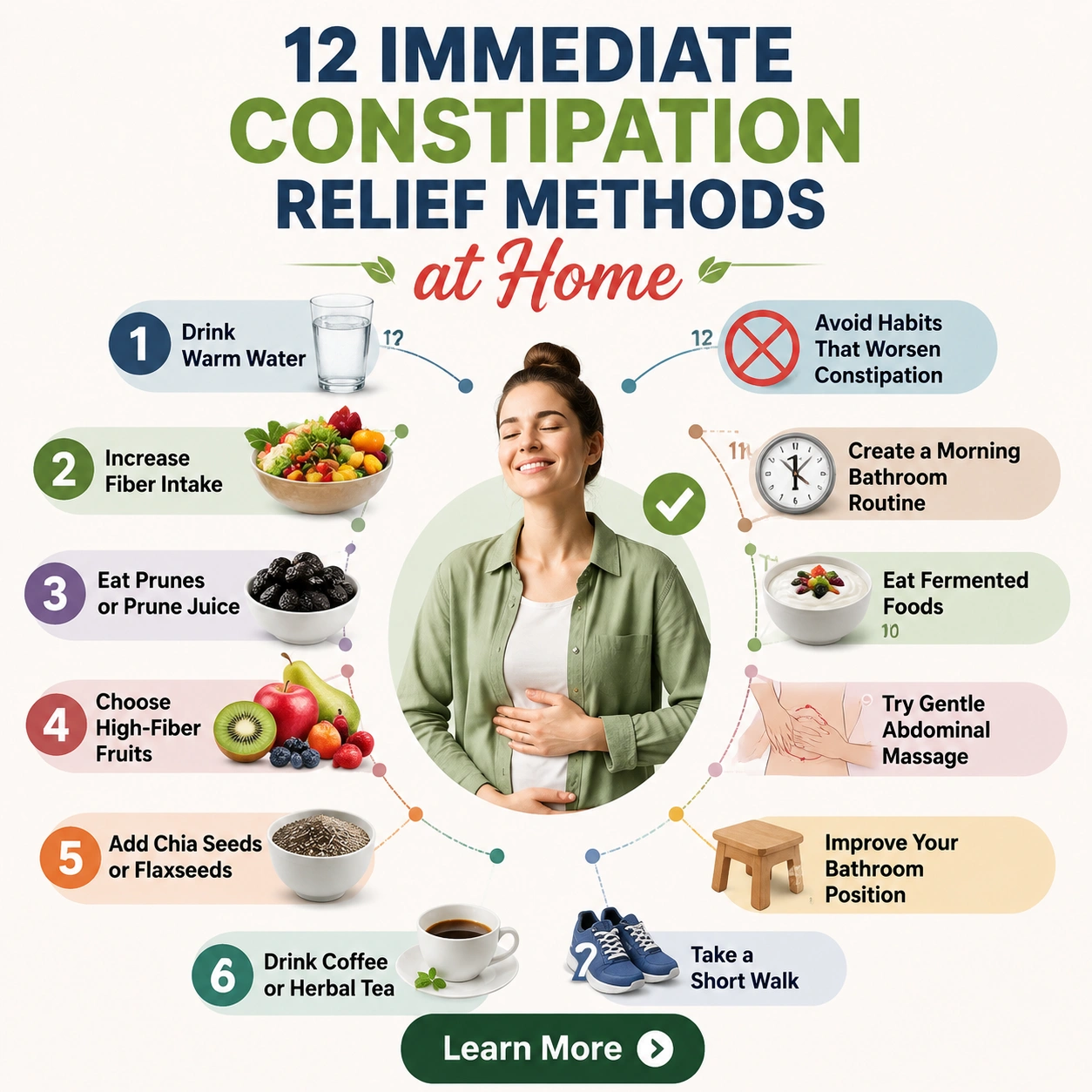
12 Immediate Constipation Relief Methods at Home
Constipation can often be improved with simple lifestyle changes and natural approaches. These 12 home methods focus on hydration, fiber, movement, and healthy digestive habits that may support easier bowel movements.
1. Drink Warm Water
One of the easiest steps for at-home relief of constipation is increasing fluid intake. Water supports digestion by helping maintain proper hydration and supporting softer stools.
Warm water may feel especially comforting because it can promote relaxation and support digestion. Many people prefer to drink a glass of warm water upon waking because the morning is naturally a time when the digestive system becomes more active.
Helpful hydration habits include:
- Drinking water throughout the day
- Starting the morning with warm water
- Increasing fluids when eating more fiber
- Limiting excessive sugary beverages
2. Increase Fiber Intake Gradually
Fiber is one of the most important nutrients for supporting regular bowel movements. It adds bulk to stool and helps move waste through the digestive tract.
Two main types of fiber support digestive health:
◆ Soluble fiber absorbs water and forms a softer texture.
◆ Insoluble fiber adds bulk and supports movement through the intestines.
Good sources of fiber include:
- Oats
- Vegetables
- Beans
- Whole grains
- Fruits
- Seeds
When increasing fiber intake, do so gradually. A sudden increase may cause temporary gas or bloating. Drinking enough water, along with fiber, helps the digestive system function more comfortably.
3. Eat Prunes or Drink Prune Juice
Prunes are one of the most commonly used foods for natural constipation support. They contain dietary fiber and natural substances that may help encourage bowel movement.
Prune juice is also popular because it provides fluid along with digestive support. Some people include a small serving in their routine when experiencing occasional constipation.
Ways to include prunes:
- Eat a few prunes as a snack
- Add chopped prunes to oatmeal
- Drink prune juice with breakfast
4. Choose High-Fiber Fruits
Certain fruits naturally contain fiber and water, making them helpful additions to a constipation-friendly diet.
Some commonly chosen fruits include:
- Pears – Pears provide fiber and natural sugars that may support bowel regularity.
- Kiwi – Kiwi contains fiber and has been studied for its potential digestive benefits.
- Apples – Apples provide fiber, especially when eaten with the skin.
- Berries – Berries offer fiber and antioxidants that support overall wellness.
Adding a variety of fruits throughout the week can support digestive health while providing important nutrients.
5. Add Chia Seeds or Flaxseeds
Seeds can be a convenient way to increase daily fiber intake. Chia seeds and flaxseeds absorb liquid and develop a gel-like texture, which may help increase stool bulk.
Ways to use them include:
- Adding chia seeds to yogurt
- Mixing ground flaxseed into oatmeal
- Blending seeds into smoothies
Always consume seeds with enough fluids. Fiber works best when paired with proper hydration.
6. Drink Coffee or Herbal Tea
Some beverages may help stimulate digestive activity. Coffee is commonly associated with bowel movement because caffeine and other natural compounds may encourage intestinal contractions in some individuals.
People who tolerate coffee may find that drinking it in the morning supports their regular routine.
Other options include:
- Warm herbal tea
- Ginger tea
- Peppermint tea
- Warm lemon water
These drinks may provide digestive comfort while helping maintain fluid intake.
7. Take a Short Walk
Physical movement is a simple strategy that may help relieve constipation. Walking promotes physical activity, which may also stimulate activity in the digestive system.
A short walk may be especially useful:
- After meals
- In the morning
- After long periods of sitting
8. Improve Your Bathroom Position
Your sitting position during a bowel movement can influence how easily stool passes. Many modern toilets place the body in a position that may not fully support natural elimination.
Raising your feet slightly with a small stool can help position your knees higher than your hips. This posture may help relax the muscles involved in bowel movements and reduce unnecessary straining.
Helpful bathroom habits include:
- Take your time and avoid rushing
- Avoid excessive pushing or straining
- Respond to the urge to use the bathroom
- Create a comfortable routine
Straining too often may increase discomfort and can contribute to problems such as hemorrhoids. A relaxed approach can make bowel movements easier.
9. Try Gentle Abdominal Massage
A gentle abdominal massage is another home technique some people use to support digestion. Light pressure and circular movements around the abdomen may encourage relaxation and help promote normal intestinal movement.
A simple approach:
- Lie down comfortably or sit in a relaxed position.
- Use gentle circular motions around your abdomen.
- Move slowly without applying painful pressure.
Abdominal massage should always be gentle. If you experience severe pain, swelling, or unusual symptoms, it is better to seek medical advice instead of attempting home techniques.
10. Eat Fermented Foods for Gut Support
The digestive system contains trillions of microorganisms that contribute to overall gut balance. Supporting a healthy gut environment may help maintain regular digestion.
Fermented foods containing beneficial bacteria are often included in digestive wellness routines.
Examples include:
- Yogurt with live cultures
- Kefir
- Sauerkraut
- Kimchi
Yogurt may be especially convenient because it can be added to breakfast meals with fiber-rich foods such as berries, oats, or seeds.
11. Create a Morning Bathroom Routine
The body often follows natural daily rhythms, and many people experience stronger bowel activity in the morning. Creating a consistent routine may help encourage regular bowel habits.
A simple morning routine may include:
- Drink a glass of water after waking.
- Eat a fiber-rich breakfast.
- Allow time for a bathroom visit.
- Avoid ignoring the urge to go.
Consistency is important. The digestive system responds well to regular patterns, and healthy routines may reduce occasional episodes of constipation.
12. Avoid Habits That Can Worsen Constipation
While adding helpful habits is important, removing constipation triggers can also make a difference.
Common habits that may contribute to constipation include:
- Eating too many processed foods
- Drinking too little water
- Being physically inactive
- Frequently delaying bathroom visits
- Having a diet low in fiber
Replacing these habits with healthier choices can support better digestive function.
Simple daily improvements include:
- Adding more fruits and vegetables
- Moving regularly throughout the day
- Drinking enough fluids
- Maintaining consistent meal times
Drinks That May Help With Constipation Relief
Many people search for drinks that may help them poop quickly. While no drink works instantly for everyone, certain beverages may support digestion and hydration.
💧Warm Water
- Warm water helps increase fluid intake and may support softer stools.
🍑Prune Juice
- Prune juice is commonly used as a natural constipation support option because it provides fluid and digestive-supporting nutrients.
☕Coffee
- Coffee may stimulate bowel activity in some individuals, especially when consumed as part of a morning routine.
🍵Herbal Tea
- Warm herbal teas may provide comfort and encourage fluid intake.
🍋Lemon Water
- Lemon water is an easy way to increase hydration while adding flavor to plain water.
The effectiveness of these drinks depends on the individual and the underlying cause of constipation.
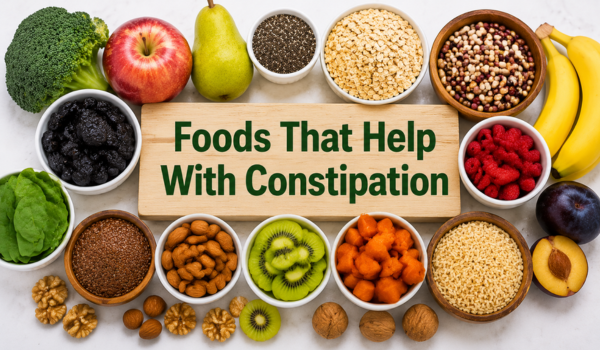
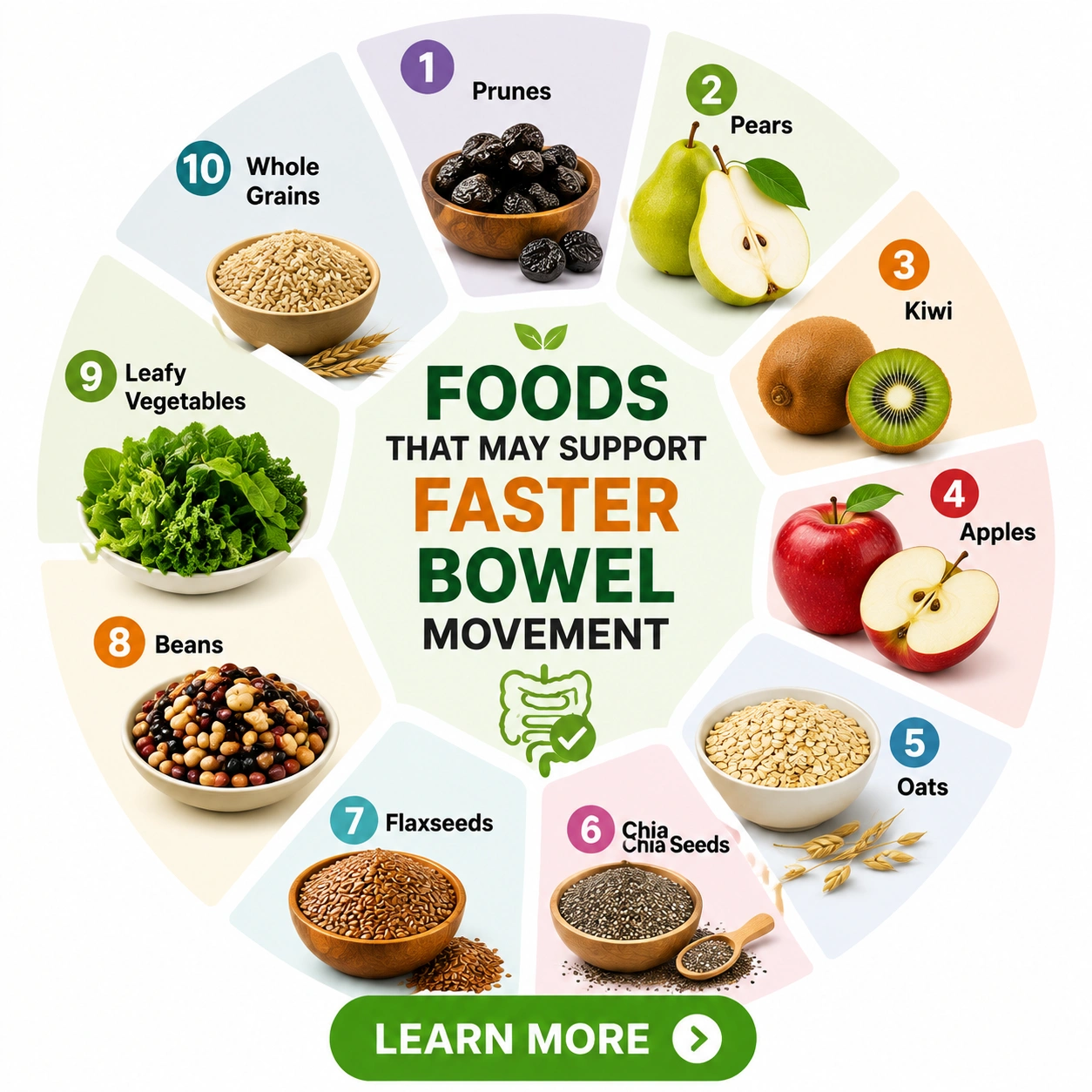
Foods That May Support Faster Bowel Movement
Food choices play an important role in digestive regularity. Adding fiber-rich foods may help support smoother stool movement.
1. Prunes: Prunes contain fiber and are traditionally used for constipation support.
2. Pears: Pears provide fiber and natural hydration.
3. Kiwi: Kiwi contains fiber and nutrients that support digestive wellness.
4. Apples: Apples with the skin provide additional fiber.
5. Oats: Oats contain soluble fiber that supports stool consistency.
6. Chia Seeds: Chia seeds absorb water and add fiber to meals.
7. Flaxseeds: Ground flaxseeds provide plant-based fiber.
8. Beans: Beans are high in fiber and support overall digestive health.
9. Leafy Vegetables: Vegetables provide fiber, vitamins, and minerals.
10. Whole Grains: Whole grains can help increase daily fiber intake.
How to Relieve Constipation Naturally Overnight
Some people look for overnight relief from constipation. While results cannot be guaranteed, certain evening habits may support comfortable digestion.
Consider:
- Drinking enough water during the day
- Eating a fiber-rich dinner
- Taking a gentle walk after meals
- Avoiding heavy processed foods before bed
- Maintaining a regular sleep schedule
What Not to Do When You Are Constipated
When constipation occurs, certain actions may worsen symptoms.
Avoid:
- Excessive Straining
Pushing too hard can increase discomfort and may irritate the rectal area.
- Sudden Large Amounts of Fiber
Adding too much fiber quickly may cause bloating and gas.
- Ignoring Symptoms
Persistent or severe constipation may require professional evaluation.
- Relying Only on Quick Fixes
Short-term solutions may help occasional constipation, but long-term habits are important for maintaining digestive health.
When to Seek Medical Help for Constipation
Home remedies can support occasional constipation, but some situations require medical attention.
Contact a healthcare professional if you experience:
- Severe or persistent abdominal pain
- Blood in your stool
- Unexplained weight loss
- Vomiting
- Fever
- A sudden change in bowel habits
- Constipation lasting several weeks
These symptoms may indicate a condition that requires proper evaluation.
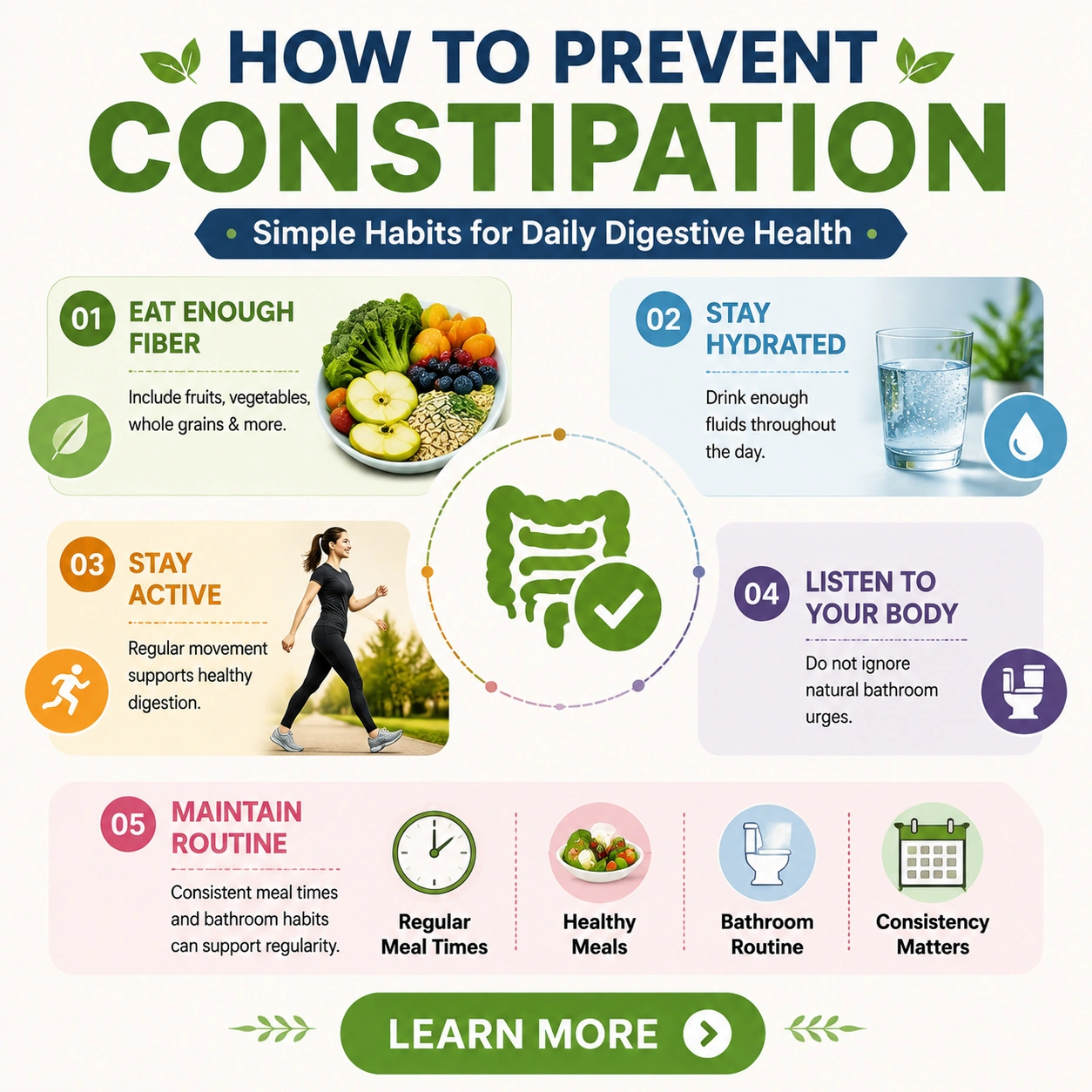
How to Prevent Future Constipation
Preventing constipation often involves maintaining consistent digestive habits.
Helpful strategies include:
Eat Enough Fiber
- Aim to include fruits, vegetables, whole grains, and other fiber sources regularly.
Stay Hydrated
- Drink enough fluids throughout the day.
Stay Active
- Regular movement supports healthy digestion.
Listen to Your Body
- Do not ignore natural bathroom urges.
Maintain Routine
- Consistent meal times and bathroom habits can support regularity.
Final Thoughts on Immediate Constipation Relief at Home
Drinking enough water, increasing fiber intake, choosing supportive foods, staying active, and improving bathroom habits can all help encourage healthier bowel movement patterns.
The 12 methods discussed in this guide focus on natural approaches that may support occasional constipation. However, every person’s digestive system is different, and the time needed for relief can vary.
For lasting digestive comfort, focus on daily habits instead of only searching for quick solutions. A balanced diet, proper hydration, regular movement, and consistent routines create a strong foundation for better digestive wellness.
If constipation becomes frequent or severe, or is accompanied by concerning symptoms, consult a healthcare professional for personalized guidance.

.
About the Author