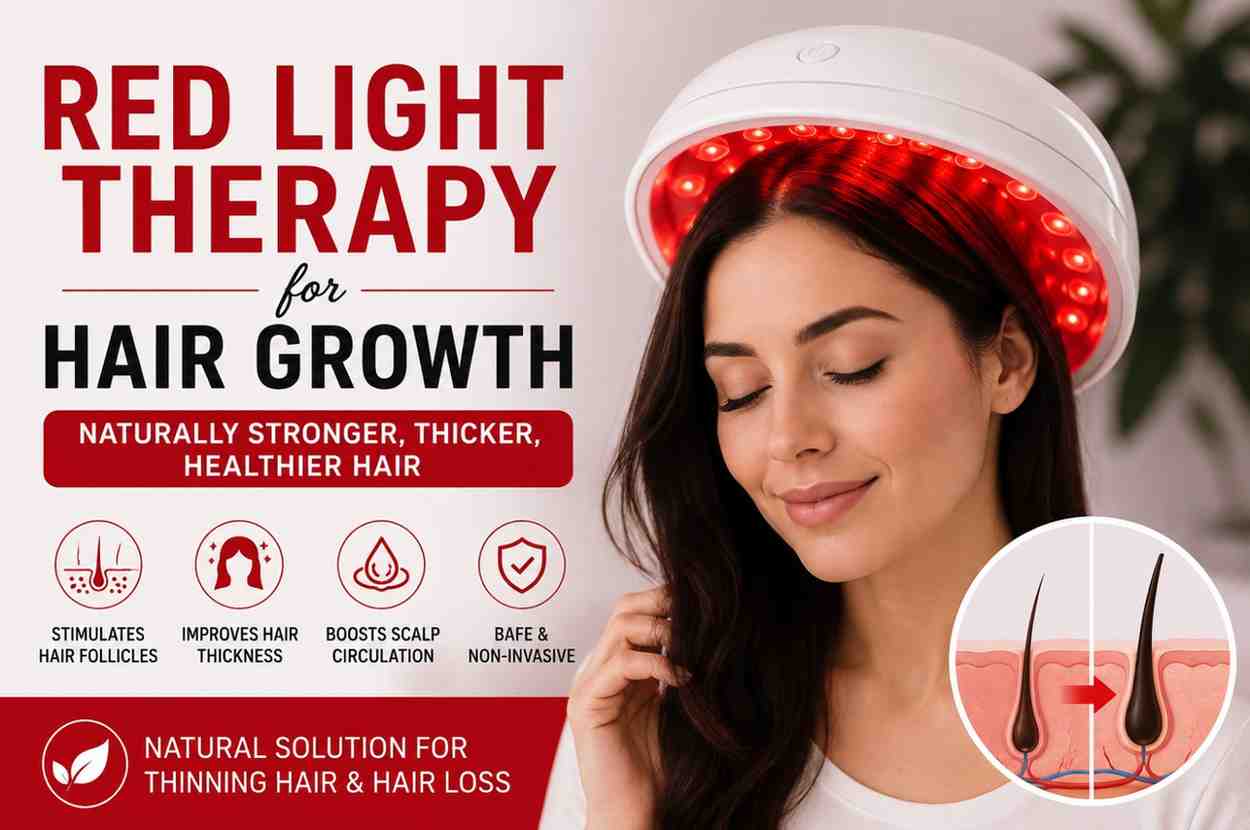
💫Red Light Therapy for Hair Growth 🔥: A Complete Guide to Thicker, Healthier Hair Naturally helps you understand how this non-invasive treatment works, its benefits, expected results, and tips for supporting healthier, fuller hair.
Hair loss affects millions of men and women worldwide. Whether caused by genetics, aging, stress, hormonal changes, or certain medical conditions, thinning hair can affect confidence and self-esteem.
As more people look for non-invasive solutions, red light therapy for hair growth has become one of the most talked-about treatments.
Unlike medications or surgical procedures, red light therapy is painless, drug-free, and easy to use at home or in a clinic. It uses specific wavelengths of red light to stimulate the scalp, helping support healthier hair follicles and encouraging natural hair growth.
In this complete guide, you’ll learn:
- What red light therapy is
- How it works for hair growth
- Scientific evidence behind the treatment
- Benefits and limitations
- Who may benefit the most
- How to use it correctly
- Expected timeline for results
- Tips to maximize hair growth naturally
If you’re considering red light therapy for hair growth, this guide will help you understand what to expect and whether it’s the right option for your hair restoration journey.
What Is Red Light Therapy?
Red light therapy (RLT), also called low-level laser therapy (LLLT) or photobiomodulation, is a non-invasive treatment that exposes the skin to low levels of red light. Unlike UV rays from the sun, these wavelengths do not burn or damage the skin.
For hair growth, red light devices are designed to deliver light directly to the scalp. The light penetrates the skin and interacts with cells inside the hair follicles, encouraging healthier follicle function.
Today, red light therapy is available in several forms, including:
- Laser caps
- Laser helmets
- LED caps
- LED combs
- Handheld devices
- Professional clinic equipment
Most home-use devices are FDA-cleared for treating hereditary hair loss.
What Causes Hair Loss?
Hair loss happens for many different reasons. Understanding the cause can help determine whether red light therapy may be beneficial.
Common causes include:
- Genetics (androgenetic alopecia)
- Aging
- Hormonal imbalance
- Pregnancy
- Menopause
- Thyroid disorders
- Nutritional deficiencies
- Stress
- Autoimmune conditions
- Certain medications
- Poor scalp health
Hair normally grows in cycles. When follicles become weak or inactive, fewer hairs enter the active growth phase, resulting in thinner hair over time.
How Does Red Light Therapy for Hair Growth Work?
Red light therapy works by delivering wavelengths of approximately 630–680 nm (red light) or 800–850 nm (near-infrared light) to the scalp.
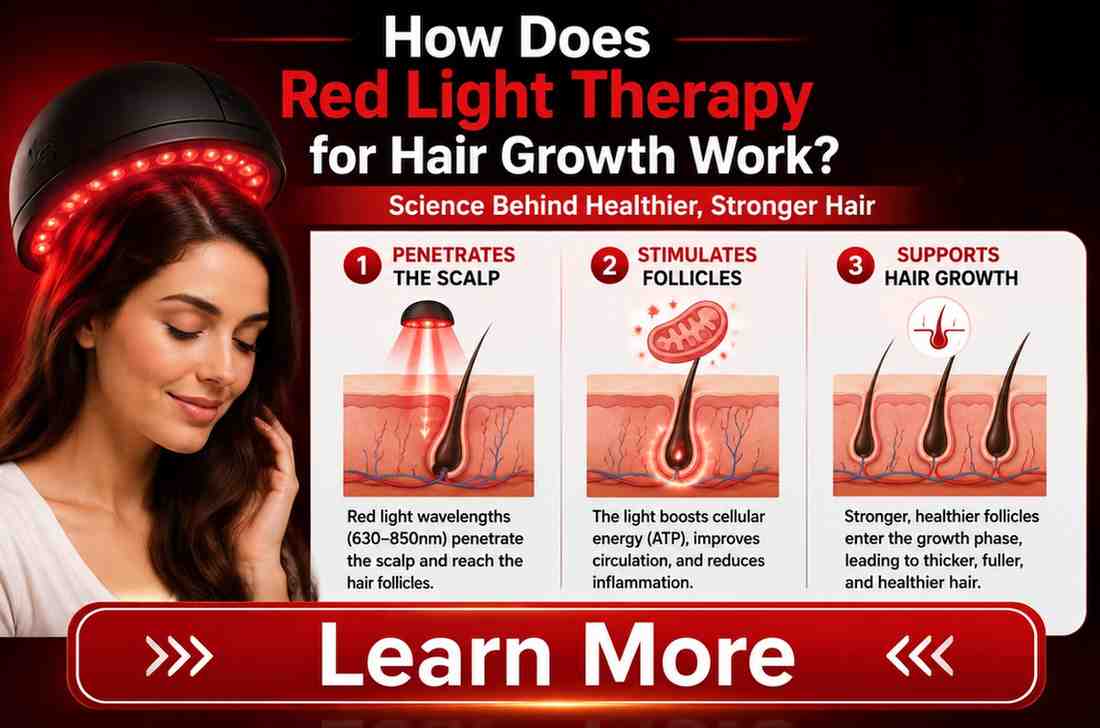
Researchers believe these wavelengths help improve cellular activity inside hair follicles.
Possible mechanisms include:
Increased Cellular Energy
- Hair follicle cells produce more ATP (cellular energy), allowing follicles to function more efficiently.
Better Blood Circulation
- Improved circulation helps deliver oxygen and nutrients to hair follicles.
Reduced Inflammation
- Some forms of hair loss involve inflammation around follicles. Red light therapy may help support a healthier scalp environment.
Longer Growth Phase
- Hair follicles may stay in the active growth (anagen) phase longer, allowing strands to grow thicker and longer.
Activation of Dormant Follicles
- Some inactive follicles may become active again, producing new hairs.
Can Red Light Therapy Really Help Hair Growth?
Current research suggests that red light therapy may improve hair density and thickness, particularly in people with androgenetic alopecia (pattern hair loss).
Several clinical studies have shown improvements after consistent use over several months.
However, results vary depending on:
- Age
- Cause of hair loss
- Severity
- Device quality
- Consistency of use
- Overall health
Red light therapy is generally considered a supportive treatment rather than a guaranteed cure.
Benefits of Red Light Therapy for Hair Growth
Many people choose this treatment because it offers several potential advantages.
Supports Natural Hair Growth
Red light therapy stimulates hair follicles without drugs or surgery.
May Increase Hair Density
Some users experience fuller-looking hair after several months.
Improves Hair Thickness
Existing hairs may become stronger and thicker over time.
Drug-Free Treatment
No prescription medication is required for most devices.
Non-Invasive
There are no injections or surgical procedures involved.
Painless
Most people feel little to no discomfort during treatment.
Safe for Long-Term Use
When used correctly, red light therapy has a strong safety profile.
Convenient Home Treatment
Many FDA-cleared devices allow users to complete sessions at home.
Who May Benefit from Red Light Therapy?
Red light therapy may help individuals experiencing:
- Male pattern baldness
- Female pattern hair loss
- Mild thinning hair
- Early-stage hair loss
- Age-related thinning
- Postpartum thinning (after medical clearance)
- Hair weakening due to stress recovery
People with severe scarring alopecia or permanent follicle damage may see limited improvement.
Who May Not Benefit?
Red light therapy may be less effective if hair loss is caused by:
- Advanced scarring alopecia
- Untreated thyroid disease
- Severe nutritional deficiencies
- Active scalp infections
- Certain autoimmune disorders
- Chemotherapy-related hair loss
Treating the underlying condition remains essential.
Types of Red Light Therapy Devices
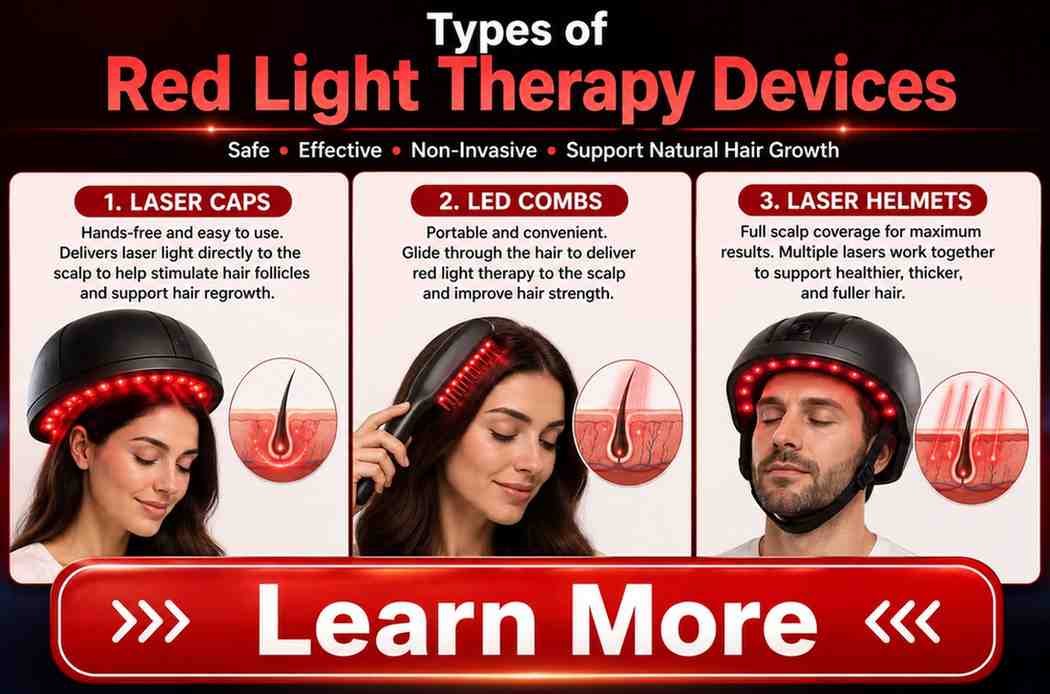
There are several options available.
Laser Caps
Hands-free and easy to wear. One of the most popular home treatments.
Laser Helmets
Provide full scalp coverage with multiple lasers.
LED Caps
Use LEDs instead of lasers and are generally more affordable.
Laser Combs
Require manually moving the comb through the hair during treatment.
Clinical Devices
Used by dermatologists and hair restoration clinics.
Red Light Therapy vs Other Hair Growth Treatments
| Treatment | Non-Invasive | Prescription Needed | Home Use | Results Time |
| Red Light Therapy | Yes | No | Yes | 3–6 Months |
| Minoxidil | Yes | No | Yes | 3–6 Months |
| Finasteride | Yes | Yes | Yes | 4–6 Months |
| PRP Therapy | No | Doctor Required | No | 3–6 Months |
| Hair Transplant | No | Surgery | No | 6–12 Months |
How to Use Red Light Therapy for Hair Growth?
Consistency is one of the most important factors.
General steps include:
Step 1
Start with a clean scalp.
Step 2
Place the device according to manufacturer instructions.
Step 3
Complete the recommended treatment session.
Step 4
Repeat sessions several times each week.
Step 5
Continue treatment consistently for several months.
Avoid stopping too early, as noticeable improvements often require time.
How Often Should You Use Red Light Therapy?
Most home devices recommend:
- 10–30 minutes per session
- 3–5 times weekly
Always follow the instructions provided with your specific device.
How Long Does It Take to See Results?
Hair grows slowly, so patience is important.
1 Month
Little visible change.
2–3 Months
Reduced shedding may occur.
3–4 Months
Some users begin noticing thicker hair.
4–6 Months
Visible improvements in density may become noticeable.
6–12 Months
Maximum results are often achieved with continued use.
Is Red Light Therapy Safe?
For most healthy adults, red light therapy is considered safe.
Possible temporary effects include:
- Mild scalp warmth
- Temporary redness
- Minor scalp irritation
- Dry scalp
Serious side effects are uncommon when FDA-cleared devices are used correctly.
Can Men and Women Both Use It?
Yes.
Red light therapy has been studied in both men and women with hereditary hair loss.
Treatment recommendations are generally similar for both sexes.
Can Red Light Therapy Be Combined with Other Hair Loss Treatments?
Yes. Many dermatologists recommend combining treatments for better results.
Common combinations include:
- Minoxidil
- Finasteride (men)
- PRP therapy
- Microneedling (under professional guidance)
- Healthy nutrition
- Hair-support supplements when appropriate
Always consult a healthcare provider before combining therapies.
Lifestyle Tips to Support Hair Growth Naturally
Red light therapy works best alongside healthy habits.
Eat Enough Protein
Hair is primarily made of protein.
Get Iron and Zinc
Deficiencies can contribute to thinning hair.
Manage Stress
Chronic stress can trigger excessive shedding.
Sleep Well
Healthy sleep supports hormone balance and tissue repair.
Avoid Smoking
Smoking may reduce blood circulation to hair follicles.
Protect Your Hair
Limit excessive heat styling and harsh chemical treatments.
Foods That Support Healthy Hair
Include foods rich in:
- Eggs
- Salmon
- Greek yogurt
- Spinach
- Sweet potatoes
- Nuts
- Seeds
- Beans
- Lean chicken
- Avocados
- Berries
These provide nutrients important for normal hair growth.
Common Mistakes to Avoid
Many people reduce their results by making simple mistakes.
Avoid:
- Skipping treatment sessions
- Expecting overnight results
- Using low-quality devices
- Ignoring underlying health conditions
- Poor nutrition
- Excessive heat styling
- Smoking
- Stopping treatment too soon
Scientific Evidence Behind Red Light Therapy
Clinical research has shown encouraging results for low-level laser therapy in androgenetic alopecia.
Studies have demonstrated:
- Increased hair density
- Improved hair thickness
- Higher patient satisfaction
- Minimal side effects
- Good safety profile
Researchers continue studying the optimal wavelengths, treatment schedules, and long-term outcomes.
Choosing the Best Red Light Therapy Device
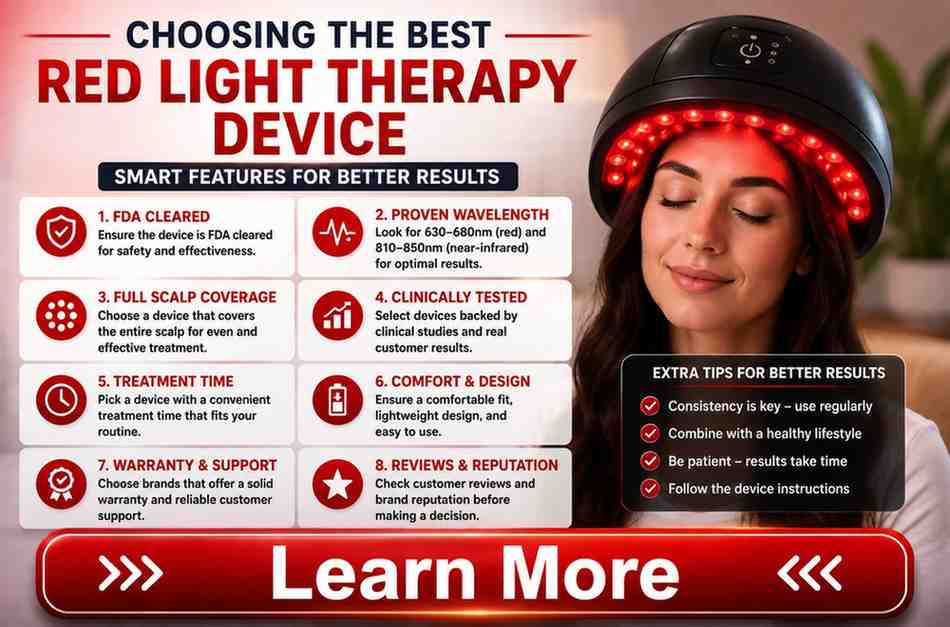
When shopping, consider:
- FDA clearance
- Medical-grade quality
- Appropriate wavelengths
- Comfortable fit
- Treatment time
- Battery life
- Warranty
- Customer support
- Clinical evidence
- Positive reviews
Avoid products that make unrealistic promises, such as “instant hair regrowth.”
Myths About Red Light Therapy
Myth 1: It Works Overnight
Hair growth requires months, not days.
Myth 2: More Sessions Mean Faster Results
Excessive treatment does not necessarily improve outcomes.
Myth 3: It Works for Every Type of Hair Loss
Effectiveness depends on the underlying cause.
Myth 4: It Can Replace Medical Care
Underlying medical conditions still require proper diagnosis and treatment.
Why Consistency Matters with Red Light Therapy for Hair Growth
One of the biggest factors in achieving good results with red light therapy for hair growth is consistency. Hair follicles respond gradually to repeated treatments, so using the device only occasionally is unlikely to produce noticeable improvements.
Following the recommended treatment schedule for several months gives the follicles the best chance of remaining active and supporting healthier hair growth.
It is also important to understand that everyone responds differently. Factors such as age, genetics, overall health, and the cause of hair loss can all influence results. Taking progress photos every month can help you track subtle improvements that may not be obvious from day to day.
👉 When to See a Dermatologist
Although red light therapy may help with certain types of hair thinning, it is important to seek medical advice if you experience sudden or severe hair loss, bald patches, scalp pain, excessive itching, or hair shedding that continues for several months.
These symptoms may indicate an underlying medical condition that requires proper diagnosis and treatment.
A dermatologist can identify the cause of your hair loss and recommend the most appropriate treatment plan.
In many cases, red light therapy for hair growth can be combined with lifestyle changes, prescription medications, or other therapies to provide a more comprehensive approach and improve long-term results.
Frequently Asked Questions
Does red light therapy regrow hair?
It may support hair regrowth in people with certain types of hair loss, particularly hereditary thinning, when used consistently.
Is red light therapy FDA approved?
Many devices are FDA-cleared, meaning they meet specific safety standards for marketed use.
How many months before seeing results?
Most users require approximately 3–6 months of consistent treatment.
Does it hurt?
No. Treatments are generally painless.
Can women use red light therapy?
Yes. Many studies include women experiencing pattern hair loss.
Is red light therapy permanent?
Results usually require ongoing maintenance. Hair thinning may gradually return if treatment stops.
Can I use it every day?
Follow the manufacturer’s recommendations. More frequent use isn’t always better.
Can it replace hair transplant surgery?
No. It is considered a supportive treatment rather than a replacement for surgical hair restoration.
Is red light therapy worth trying?
For people with early hereditary hair loss, research suggests it may be a useful non-invasive option when used consistently and with realistic expectations.
Final Thoughts
Red light therapy for hair growth has become one of the most promising non-invasive approaches for managing thinning hair.
By supporting healthier hair follicles, improving cellular activity, and encouraging the natural hair growth cycle, it may help increase hair density and thickness over time.
While it is not a miracle cure, consistent use of a quality device—combined with good nutrition, stress management, and proper scalp care—can increase the likelihood of positive results. Individuals with hereditary hair loss often experience the greatest benefits, especially when treatment begins early.
Before starting any hair restoration program, it is a good idea to consult a dermatologist to determine the underlying cause of your hair loss and choose the most appropriate treatment plan.
With patience and regular use, red light therapy can become a valuable part of a long-term hair wellness routine.
.
About the Author