Soaking Feet in Hydrogen Peroxide for Athlete’s Foot – (⚠️Does It Work?) Learn benefits, risks, safety tips, and better foot care options!
Introduction
Can hydrogen peroxide really help with athlete’s foot? This is a common question among people looking for a simple home remedy for itchy, peeling, and irritated feet.
Because hydrogen peroxide is known for its cleansing and antimicrobial properties, many people consider soaking their feet in it as a possible solution.
However, athlete’s foot is a fungal condition, not just a surface hygiene issue. The fungus can affect the skin’s outer layers of the skin, so a simple soak may not always yield the results people expect.
Before trying this method, it is important to understand what hydrogen peroxide can and cannot do, and how it compares with more established foot-care approaches.
This guide explains the potential benefits, safety concerns, and practical ways to support healthier feet when dealing with athlete’s foot.
What Is Athlete’s Foot?
Athlete’s foot, medically known as tinea pedis, is a fungal infection that affects the outer layers of the skin on the feet. It develops when fungi called dermatophytes grow and multiply in warm, damp environments.
These fungi naturally thrive in places where moisture collects, such as:
- Between toes
- Inside shoes
- Around sweaty areas of the feet
- Locker rooms and shared shower floors
Athlete’s foot does not only affect athletes. Anyone can develop it, especially people who frequently wear closed shoes, sweat heavily, walk barefoot in shared areas, or have difficulty keeping feet dry.
Common symptoms include:
- Itching between the toes
- Burning sensations
- Dry or cracked skin
- Peeling or scaling
- Redness and irritation
- Blisters in some cases
- Thickened or uncomfortable skin
The infection may begin between the toes and gradually spread to other areas of the foot. Without proper foot care, it can continue for weeks or months.
Why Do People Try Hydrogen Peroxide for Athlete’s Foot?
Hydrogen peroxide has been used for many years as a cleaning and disinfecting agent. It releases oxygen when it breaks down, creating a bubbling effect that helps remove debris from wounds and surfaces.
Because of these properties, some people believe soaking feet in hydrogen peroxide may help:
- Clean the skin
- Reduce surface microorganisms
- Support better foot hygiene
- Freshen feet after sweating
The idea behind this remedy is that hydrogen peroxide may create an environment that is less favorable for fungal growth.
Hydrogen peroxide may affect surface microorganisms, but it does not work the same way as antifungal treatments designed to target fungal infections.
Does Soaking Feet in Hydrogen Peroxide Kill Athlete’s Foot Fungus?
Hydrogen peroxide has antimicrobial properties, meaning it can damage certain types of microorganisms. Laboratory studies have shown that hydrogen peroxide can affect bacteria, viruses, and some fungi under specific conditions.
However, using hydrogen peroxide at home is different from its use in controlled laboratory settings.
Several factors affect its effectiveness:
Concentration Matters
- Household hydrogen peroxide is commonly sold as a 3% solution. This concentration is often used for cleaning, but its effect on fungal infections can vary.
- Higher concentrations may be more damaging to microorganisms, but they can also increase the risk of skin irritation.
Contact Time Matters
- For hydrogen peroxide to affect microorganisms, it generally needs enough contact time. A quick rinse may not provide meaningful exposure.
Athlete’s Foot Fungus Lives in Skin Layers
- The fungi that cause athlete’s foot are not only on the surface. They can grow within the outer layers of the skin.
- This means a surface disinfectant may not fully address the underlying fungal growth.
- For this reason, hydrogen peroxide foot soaks should not be considered a proven cure for athlete’s foot.
Potential Benefits of Hydrogen Peroxide Foot Soaks
Although hydrogen peroxide is not a primary treatment for athlete’s foot, some people use diluted solutions as part of their foot-cleaning routine.
Possible benefits may include:
Helps Clean the Feet
- Hydrogen peroxide can help remove surface debris and may support general foot cleanliness when used appropriately. Clean feet are important because sweat, moisture, and dead skin can create an environment where fungi thrive.
May Reduce Surface Microorganisms
- Hydrogen peroxide can interact with some microorganisms on the skin surface. This may help reduce certain unwanted microbes.
May Help With Foot Freshness
- Some people find that occasional foot soaks help their feet feel cleaner and refreshed, especially after sweating or wearing shoes for long periods. The main benefit may come from improved hygiene habits rather than direct fungal elimination.

Risks of Soaking Feet in Hydrogen Peroxide
Although hydrogen peroxide is commonly available, it does not mean it is risk-free for skin use. Using hydrogen peroxide too frequently or incorrectly may cause problems.
Skin Dryness and Irritation
Hydrogen peroxide can be drying. Frequent exposure may remove natural oils from the skin, leading to:
- Dryness
- Flaking
- Increased sensitivity
- Cracking
Healthy skin acts as a protective barrier. Excessive dryness may make the skin more vulnerable to irritation.
Possible Skin Damage
Strong or repeated exposure may irritate healthy skin cells. This can slow the natural healing process if the skin is already cracked or damaged.
People with sensitive skin may notice discomfort more quickly.
Burning or Stinging Sensation
Some individuals experience temporary stinging when hydrogen peroxide comes into contact with irritated skin, open cracks, or areas affected by inflammation.
If discomfort occurs, stopping use is generally recommended.
How to Use Hydrogen Peroxide for Foot Hygiene Safely
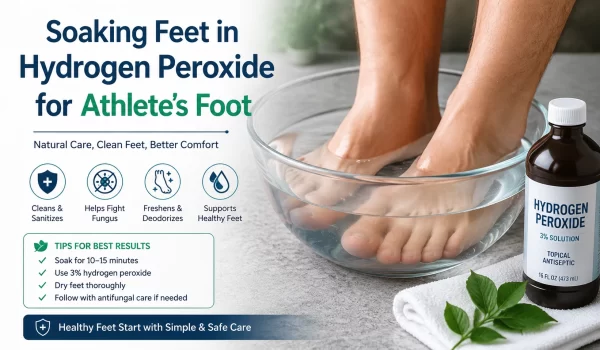
If someone chooses to try a hydrogen peroxide foot soak, it is important to understand that the goal should be to support foot cleanliness, not to assume it will completely remove athlete’s foot.
Carefully using hydrogen peroxide may help reduce surface contaminants, but improper use can cause dryness and irritation.
General safety considerations include:
- Use a diluted solution rather than applying concentrated hydrogen peroxide directly.
- Avoid soaking for long periods.
- Do not use it on deep cracks, open wounds, or severely irritated skin.
- Stop if burning, redness, or worsening dryness occurs.
- Avoid frequent daily use that may damage the skin barrier.
After any foot soak, drying the feet thoroughly is one of the most important steps. Moisture trapped between the toes creates the ideal environment for fungal growth.
A clean towel should be used to dry the feet, especially between the toes where moisture commonly remains.
How Long Should You Soak Feet in Hydrogen Peroxide?
There is no scientifically established soaking time for hydrogen peroxide to cure athlete’s foot.
Many home remedies suggest short soaking periods, but longer exposure does not necessarily mean better results. Extended contact may increase irritation without providing additional benefits.
The condition of your skin matters. Feet with healthy, intact skin may tolerate occasional exposure better than feet with:
- Open cracks
- Peeling areas
- Severe redness
- Active irritation
If athlete’s foot symptoms persist despite home care, relying solely on hydrogen peroxide may delay access to more effective treatment.
Hydrogen Peroxide vs. Proven Athlete’s Foot Treatments
When managing athlete’s foot, the main goal is to reduce fungal growth, support skin recovery, and help prevent the infection from returning.
| Method | Purpose | Key Point |
|---|---|---|
| Hydrogen Peroxide | Cleans the skin surface | May support hygiene but is not a proven antifungal treatment |
| Antifungal Products | Targets fungal growth | Designed specifically for athlete’s foot |
| Keeping Feet Dry | Reduces moisture buildup | Helps prevent fungal growth |
| Cleaning Shoes & Socks | Removes fungal exposure | Helps lower the chance of recurrence |
Natural Ways to Support Healthier Feet
Many people search for natural options because they prefer simple approaches using items they already have at home. While natural methods may support foot hygiene, they should not replace proven antifungal care when symptoms are persistent.
Some supportive habits include:
Regular Foot Washing
- Washing feet daily helps remove sweat, bacteria, and skin buildup.
- After washing, drying completely is just as important as cleaning.
Moisture Management
- Keeping feet dry can make a major difference.
Consider:
- Wearing moisture-wicking socks
- Changing socks after exercise
- Avoiding tight shoes for long periods
- Letting feet breathe when possible
Gentle Skin Care
- Healthy skin is better able to protect itself.
- Avoid harsh scrubbing because damaged skin may become more irritated.
- A gentle approach can help maintain the natural skin barrier.

Can Hydrogen Peroxide Prevent Athlete’s Foot?
Hydrogen peroxide may help clean the skin surface, but there is limited evidence showing that regular foot soaks prevent athlete’s foot. The strongest prevention strategies focus on reducing exposure to fungal environments.
Keep Feet Dry
➱Dry feet are less favorable for fungal growth.
➱Pay special attention to areas between the toes.
Wear Protective Footwear in Shared Areas
➱Public showers, gyms, swimming pools, and locker rooms can contain fungal organisms.
➱Wearing sandals or shower shoes may reduce direct contact.
Avoid Sharing Personal Items
➱Towels, socks, and shoes can spread fungal organisms between people.
➱Personal foot-care items should remain separate.
Change Shoes Regularly
➱Shoes that remain damp for long periods may encourage fungal growth.
➱Allowing footwear to dry fully can support healthier feet.
Signs Your Athlete’s Foot May Need Medical Attention
Many cases of athlete’s foot improve with proper care. However, some situations require professional evaluation.
Consider speaking with a healthcare provider if:
- Symptoms do not improve after several weeks of treatment
- The infection keeps returning
- The skin becomes painful or swollen
- There is spreading redness
- You notice drainage or signs of infection
- Symptoms affect daily activities
People with certain health conditions that affect circulation or immune function should also seek medical guidance before trying home remedies.
Common Mistakes People Make When Treating Athlete’s Foot
Managing athlete’s foot requires consistency. Some common mistakes can make symptoms last longer.
Using Remedies for Only a Few Days – Fungal infections often require ongoing care. Stopping treatment too early may allow the fungus to continue growing.
Ignoring Shoes and Socks – Treating the feet while continuing to wear contaminated footwear can increase the chance of recurrence.
Keeping Feet Moist – Applying products without allowing the feet to dry properly can create conditions that support fungal growth.
Scratching Irritated Skin – Scratching can spread irritation and damage the skin’s protective barrier.
What Experts Consider the Best Approach
A practical athlete’s foot care routine usually focuses on three areas:
-
Target the fungus
Use appropriate antifungal approaches when needed.
-
Protect the skin barrier
Avoid excessive irritation from harsh cleaning methods.
-
Control moisture
Keep feet clean, dry, and comfortable.
Hydrogen peroxide may fit into a general cleaning routine for some people, but it should not be viewed as a guaranteed solution for athlete’s foot.

Frequently Asked Questions
Can hydrogen peroxide remove athlete’s foot?
Hydrogen peroxide may help clean the skin surface, but it is not considered a proven cure for athlete’s foot. The fungal infection often requires targeted antifungal care.
Is soaking feet in hydrogen peroxide safe?
A properly diluted hydrogen peroxide soak may be tolerated by some people, but frequent use can cause dryness and irritation. Avoid using it on damaged skin.
Does hydrogen peroxide kill foot fungus?
Hydrogen peroxide can affect some microorganisms, but its ability to eliminate athlete’s foot fungus on human skin has not been clearly proven.
Can I use hydrogen peroxide between my toes?
The skin between the toes is sensitive and commonly affected by athlete’s foot. Hydrogen peroxide may cause dryness or irritation in this area.
What is the fastest way to improve athlete’s foot?
Consistent antifungal treatment, keeping feet dry, and maintaining proper hygiene are commonly recommended approaches for improving symptoms.
Final Thoughts: Is Soaking Feet in Hydrogen Peroxide for Athlete’s Foot Worth Trying?
Soaking feet in hydrogen peroxide for athlete’s foot is a popular home remedy because hydrogen peroxide is inexpensive and widely available.
It may help support general foot cleanliness and reduce some surface microorganisms, but it should not be considered a guaranteed treatment for fungal infections.
Athlete’s foot develops from fungi that grow within the outer layers of skin, meaning effective management usually requires more than surface cleaning.
Maintaining dry feet, practicing good hygiene, caring for footwear, and using appropriate antifungal options when needed are the most reliable strategies.
If you decide to use hydrogen peroxide as part of your foot-care routine, use it cautiously and pay attention to how your skin responds.
The best approach is not simply to find one quick remedy, but to create consistent habits that support comfortable, healthy feet over time.

.
About the Author