🖊️How Long Does Sermorelin Stay in Your System? 🔥A Complete Guide to Sermorelin Duration, Metabolism, and Effects⚡
Introduction
Sermorelin is a peptide-based compound that has gained attention for its role in supporting the body’s natural production of growth hormone.
Unlike synthetic growth hormone treatments that directly introduce human growth hormone (HGH) into the body, Sermorelin works by encouraging the pituitary gland to release more of its own growth hormone naturally. Because of this unique mechanism, many people wonder: how long does Sermorelin stay in your system?
Understanding Sermorelin’s duration in the body can help users better understand its effects, timing, metabolism, and how frequently it may be administered under professional guidance.
While Sermorelin itself has a relatively short presence in the bloodstream, the biological effects it triggers may continue much longer because it stimulates natural hormone pathways.
The amount of time Sermorelin remains detectable can vary depending on several factors, including individual metabolism, dosage, frequency of use, overall health, and how the body processes peptides.
Although Sermorelin does not remain in the bloodstream for an extended period, its influence on growth hormone release may contribute to ongoing changes in sleep quality, recovery, energy levels, and body composition over time.
This article explains how long Sermorelin stays in your system, how quickly the body breaks it down, how long its effects may last, and what factors influence its activity inside the body.
What Is Sermorelin?
Sermorelin is a synthetic peptide that is structurally similar to a naturally occurring hormone called growth hormone-releasing hormone (GHRH). GHRH is produced in the hypothalamus and plays an important role in signaling the pituitary gland to release growth hormone.
Instead of supplying growth hormone directly, Sermorelin acts as a messenger that encourages the body’s own systems to increase growth hormone production. This makes it different from HGH replacement approaches, where the hormone itself is administered.
Sermorelin has been studied for its role in stimulating growth hormone and is often discussed in connection with supporting healthy aging, muscle recovery, metabolism, and overall wellness. Because it works through the body’s natural hormone pathways, its effects can differ from person to person.
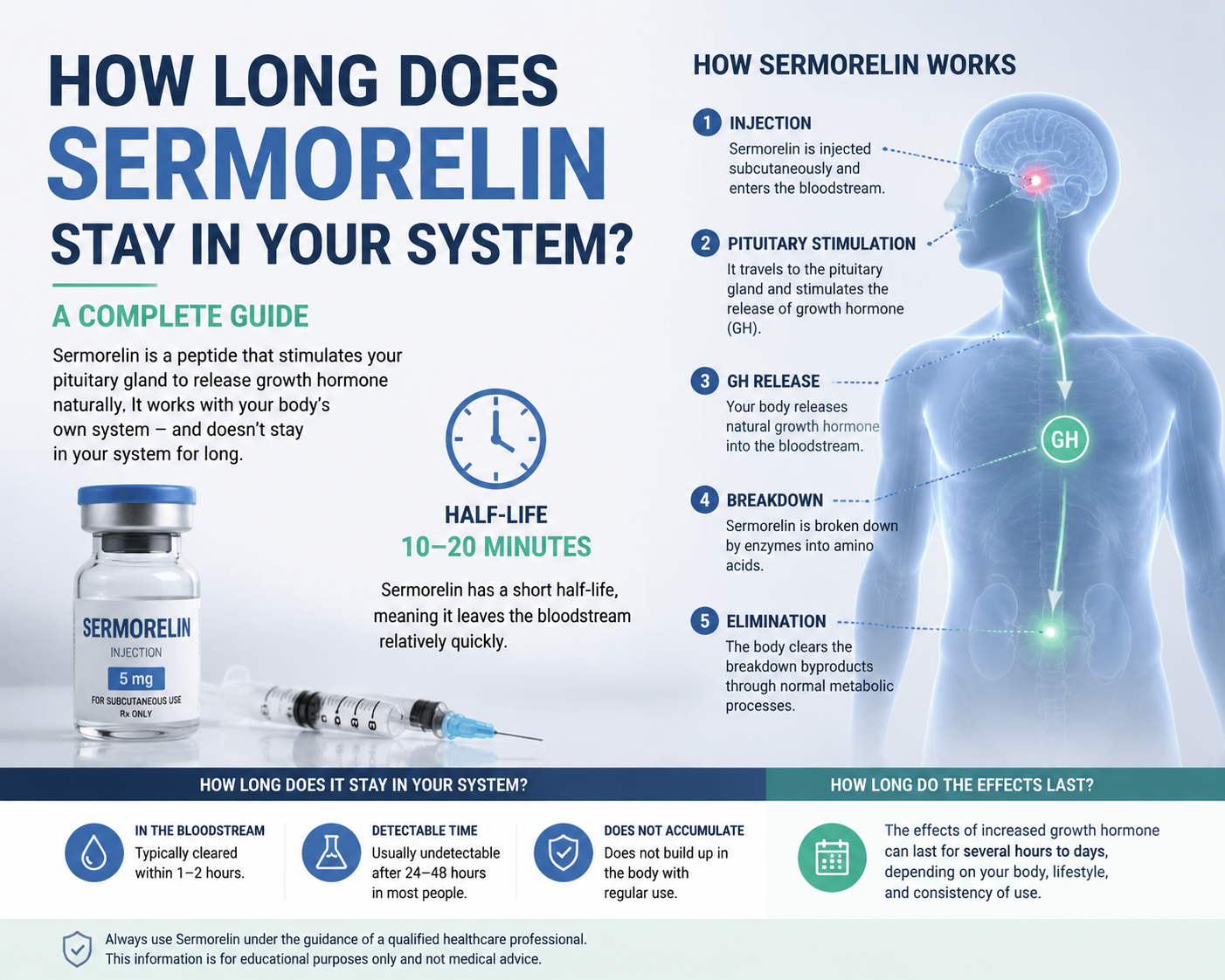
When Sermorelin enters the body, it interacts with receptors involved in growth hormone regulation. This interaction sends signals to the pituitary gland, encouraging the release of growth hormone in a more natural pattern. After performing its signaling function, Sermorelin is rapidly broken down and cleared from the bloodstream.
How Does Sermorelin Work in the Body?
Sermorelin works by activating the body’s natural growth hormone pathway. After administration, it travels through the bloodstream and reaches specific receptors in the pituitary gland. These receptors respond by increasing the release of growth hormone.
Growth hormone plays several important roles throughout the body. It helps regulate tissue repair, protein production, metabolism, and the maintenance of muscle and bone health.
Growth hormone also stimulates the production of insulin-like growth factor-1 (IGF-1), which contributes to many of the body’s growth and repair processes.
Because Sermorelin encourages the body to produce its own growth hormone, the response is influenced by an individual’s natural hormone function. Factors such as age, sleep patterns, stress levels, nutrition, and overall health can affect how strongly the body responds.
The body does not store large amounts of Sermorelin after administration. Instead, it performs its signaling role and is then metabolized. However, the hormonal response it triggers may persist beyond the period when Sermorelin is present.
How Long Does Sermorelin Stay in Your System?
Sermorelin has a relatively short half-life, meaning the body removes it fairly quickly after administration. In many cases, Sermorelin remains active in the bloodstream for only a short period before it is broken down.
The estimated half-life of Sermorelin is approximately 10 to 20 minutes, although individual responses may vary. A half-life refers to the amount of time required for the body to reduce the concentration of a substance by half.
Because Sermorelin is a peptide, it is naturally processed by enzymes that break proteins and peptides into smaller components. After it has completed its signaling function, the body gradually clears it through normal metabolic processes.
Although Sermorelin itself may leave the bloodstream relatively quickly, the effects associated with increased growth hormone release may last longer. This happens because the body’s response to the signal can continue after the peptide has already been metabolized.
For many individuals, Sermorelin’s duration in action is measured in minutes to hours rather than days. However, changes in hormone activity may be observed over a longer period when used consistently under medical supervision.
Understanding Sermorelin Half-Life
The half-life of a compound is one of the most important factors for understanding how long it remains in the body. A shorter half-life generally means the body removes the compound more quickly.
Sermorelin’s short half-life occurs because peptides are naturally broken down efficiently by the body. Unlike some medications that accumulate and remain active for several days, Sermorelin does not typically build up significantly in the bloodstream.
However, half-life does not tell the entire story. A substance can leave the bloodstream quickly while still producing effects afterward. Sermorelin works by stimulating a biological response rather than acting as a long-lasting hormone replacement.
For example, after Sermorelin signals the pituitary gland, the body may continue producing growth hormone according to its own natural processes. This means the overall impact of Sermorelin depends not only on how long the peptide remains present but also on how the body responds.
Several factors can influence Sermorelin’s half-life and activity, including:
- Individual Metabolism
- Age
- Body composition
- Kidney and liver function
- Dosage amount
- Administration method
- Frequency of use
- Overall hormone balance
How Does the Body Process and Remove Sermorelin?
The body processes Sermorelin similarly to other peptide compounds. After administration, enzymes begin breaking the peptide into smaller components that can be naturally reused or eliminated.

The metabolism process generally involves:
Absorption
After administration, Sermorelin enters circulation and interacts with its target receptors. The speed of absorption can depend on the method of administration and individual physiology.
Activation
Once Sermorelin reaches the pituitary gland, it signals the release of growth hormone. This is the primary action of the peptide.
Breakdown
After completing its signaling activity, Sermorelin is broken down by enzymes called peptidases. These enzymes naturally digest peptides into smaller molecules.
Elimination
The resulting breakdown products are processed through normal metabolic pathways and removed from the body.
Because Sermorelin is naturally processed, it generally does not remain stored in tissues for long periods. This is one reason why consistent administration schedules are typically used when prescribed.
Does Sermorelin Accumulate in Your System?
A common question among users is whether Sermorelin builds up in the body over time.
Generally, Sermorelin does not accumulate significantly because it has a short half-life and is quickly metabolized. The body clears each dose before the next administration in most standard protocols.
However, repeated use can produce sustained biological effects because the peptide continually stimulates the growth hormone pathway. These effects are related to the body’s response rather than Sermorelin remaining stored inside the body.
This distinction is important:
Sermorelin leaves the bloodstream quickly, but the biological signals it activates may influence the body over a longer period.
Consistency is often important because natural hormone pathways respond gradually. Changes associated with growth hormone support typically develop over time rather than immediately after a single dose.
How Long Do Sermorelin Effects Last?
Although Sermorelin itself may remain active for only a short time, the effects associated with growth hormone release may last longer.
The duration of effects depends on the individual and may be influenced by:
- Natural growth hormone production levels
- Sleep quality
- Exercise habits
- Diet
- Age
- Treatment consistency
- Overall wellness
Some individuals may notice changes gradually over weeks or months rather than immediately. Since Sermorelin works by encouraging natural hormone activity, the body’s response typically develops over time.
Many biological processes influenced by growth hormone, including tissue repair and the regulation of metabolism, occur gradually. Therefore, the duration of Sermorelin’s overall impact cannot be determined only by measuring how long the peptide remains detectable.
How Long Can Sermorelin Be Detected in Your Body?
One common question people ask is whether Sermorelin can be detected in the body after administration. Since Sermorelin has a short half-life, it generally does not remain in the bloodstream for an extended period.
In most cases, Sermorelin is rapidly processed and broken down after it completes its signaling function. The exact detection period can vary depending on several personal factors, including dosage, metabolism, frequency of use, and the sensitivity of testing methods.
Unlike certain medications that may remain stored in body tissues for days or weeks, Sermorelin is a peptide that the body naturally breaks down. After it stimulates the pituitary gland, enzymes gradually digest the peptide into smaller components.
Because Sermorelin encourages the release of naturally produced growth hormone rather than directly supplying external growth hormone, detecting its presence can be more complicated. Testing may focus on hormone-related markers rather than simply identifying the peptide itself.
It is important to understand that the length of time Sermorelin remains detectable is different from how long its effects may influence the body. The peptide may disappear quickly, while changes related to growth hormone activity may continue for a longer period.
Sermorelin vs HGH: Which Stays Longer in Your System?
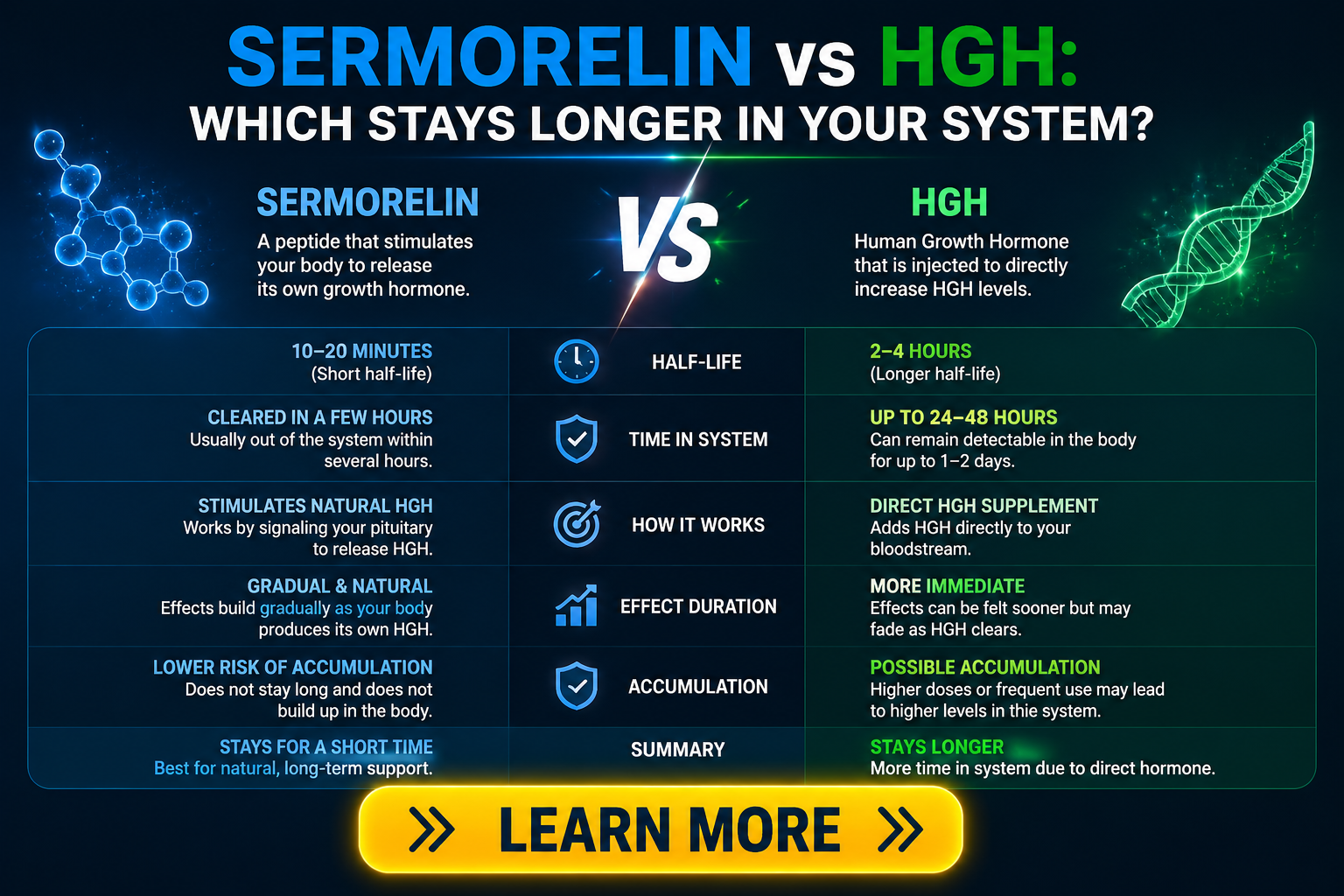
Sermorelin and human growth hormone (HGH) are often compared because both are associated with growth hormone activity. However, they work differently and have different durations inside the body.
Sermorelin acts as a growth hormone-releasing signal. It encourages the pituitary gland to produce and release the body’s own growth hormone. Because it is a smaller peptide designed to send a message, it is broken down relatively quickly.
HGH, on the other hand, is the actual growth hormone itself. When administered, it directly increases hormone levels in the bloodstream. Depending on the specific formulation, HGH may have a longer biological effect compared with Sermorelin.
The key differences include:
| Feature | Sermorelin | HGH |
| Primary Action | Stimulates natural growth hormone release | Provides growth hormone directly |
| Time in Bloodstream | Short duration | Generally longer activity |
| How It Works | Activates pituitary function | Replaces or increases hormone levels directly |
| Body Response | Depends on natural hormone production | More direct hormone exposure |
Sermorelin’s shorter presence in the body does not mean it is ineffective. Its purpose is to encourage the body’s own natural hormone regulation rather than maintain artificially elevated hormone levels.
Factors That Affect How Long Sermorelin Remains Active
Several factors can influence how quickly Sermorelin is processed and how long its effects may be experienced.
1. Individual Metabolism
Everyone’s metabolism works differently. People with faster metabolic activity may process and eliminate Sermorelin more quickly, while others may experience longer-lasting effects.
Metabolism is influenced by genetics, lifestyle habits, body composition, physical activity, and overall health.
2. Age
Age can affect hormone production and how the body responds to Sermorelin.
As people age, natural growth hormone production generally declines. Because Sermorelin works by stimulating existing pathways, younger individuals or those with stronger pituitary function may respond differently compared with older adults.
3. Dosage and Frequency
The amount of Sermorelin used and the frequency of administration may influence its overall impact.
A single dose may create a temporary increase in growth hormone signaling, while consistent use may support repeated stimulation of the growth hormone pathway.
The peptide itself may still clear quickly, but repeated administration allows ongoing stimulation.
4. Sleep Quality
Sleep plays a major role in natural growth hormone production. The body normally releases significant amounts of growth hormone during deep sleep.
Poor sleep patterns may reduce the body’s natural hormone response, while healthy sleep habits may support optimal results.
5. Nutrition and Lifestyle
A balanced diet, regular physical activity, and healthy lifestyle choices can influence how the body responds to hormone-related signals.
Protein intake, exercise routines, stress management, and hydration all contribute to overall metabolic health.
What Happens When You Stop Taking Sermorelin?
When Sermorelin is discontinued, the peptide itself is quickly cleared from the body. However, the body’s response gradually returns to its normal baseline.
Because Sermorelin stimulates natural growth hormone production rather than permanently changing hormone function, the effects generally depend on continued signaling.
After stopping use, some individuals may notice that benefits associated with increased growth hormone activity gradually decrease over time.
The timeline can vary depending on:
- Duration of use
- Individual hormone levels
- Lifestyle habits
- Age
- Overall health
Stopping Sermorelin does not typically mean the peptide remains stored in the body. Instead, the body simply stops receiving the repeated signals that encourage growth hormone release.
Can Sermorelin Affect Hormone Levels After It Leaves the Body?
Yes, Sermorelin may continue influencing hormone-related processes after the peptide itself has been broken down.
This occurs because Sermorelin’s primary role is to trigger a biological response. Once the pituitary gland receives the signal, it may release growth hormone according to the body’s natural rhythm.
The body’s hormone systems are interconnected. Growth hormone influences several areas, including:
- Muscle maintenance
- Tissue repair
- Metabolism
- Energy regulation
- Bone health
However, the duration and strength of these effects vary between individuals.
Does Sermorelin Stay Longer in Some People?
Yes. While Sermorelin generally has a short half-life, individual differences can influence how the body handles it.
Factors that may affect duration include:
Body Composition
Body fat percentage and muscle mass can influence hormone metabolism and response.
Liver and Kidney Function
The liver and kidneys play important roles in processing and removing substances from the body. Healthy organ function supports normal clearance.
Overall Health
Chronic stress, poor nutrition, lack of sleep, and certain health conditions may affect hormone regulation.
Treatment Consistency
Regular use under professional guidance may influence long-term biological responses even though each dose is cleared quickly.
Is Sermorelin Stored in Fat or Tissues?
Unlike some fat-soluble substances, Sermorelin is not known to be stored in body fat or tissues for long periods.
Sermorelin is a peptide, meaning the body processes it similarly to other protein-based compounds. After completing its function, it is broken down into smaller components.
This rapid breakdown is why Sermorelin does not typically remain active for extended periods after administration.
How Long Before Sermorelin Starts Working?
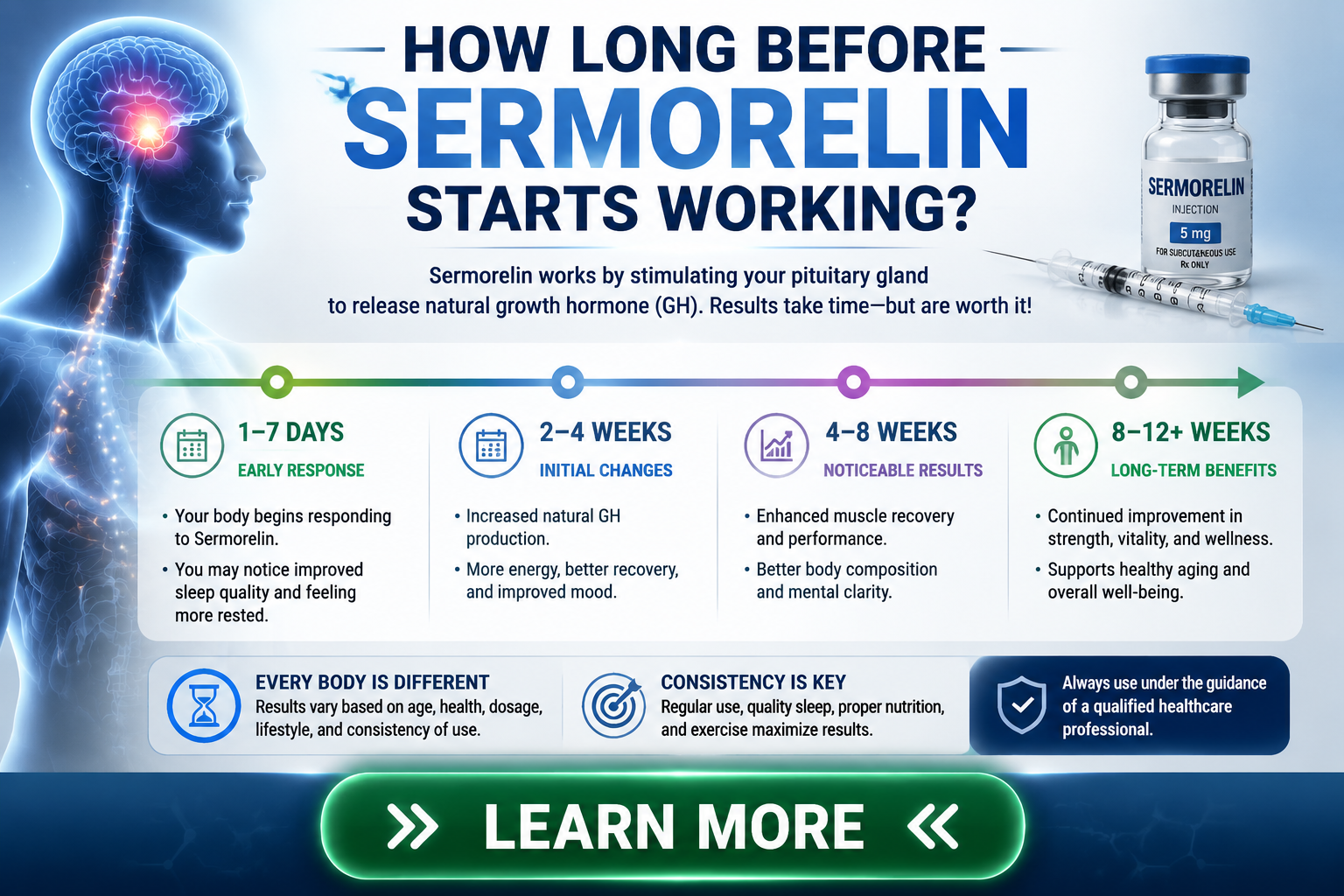
The timing of Sermorelin effects varies between individuals.
Some people may notice changes related to sleep quality, recovery, or energy over several weeks, while other benefits may take longer to become noticeable.
Because Sermorelin works by supporting natural growth hormone production, results are usually gradual rather than immediate.
Factors influencing response time include:
- Age
- Hormone levels
- Lifestyle habits
- Treatment consistency
- Overall health status
Is Sermorelin Safe for Long-Term Use?
The safety of long-term Sermorelin use depends on individual health factors, dosage, and medical supervision.
Since Sermorelin affects hormone pathways, it should be used responsibly and under guidance from a qualified healthcare professional.
Before using Sermorelin, individuals should discuss:
- Current health conditions
- Existing medications
- Hormone-related concerns
- Personal wellness goals
Healthcare providers can determine whether Sermorelin is appropriate based on individual circumstances.
Possible Side Effects of Sermorelin
While Sermorelin is generally considered well tolerated when used appropriately, some individuals may experience side effects.
Possible reactions may include:
- Injection site discomfort
- Redness or irritation
- Headache
- Dizziness
- Temporary flushing
- Changes in sleep patterns
The experience of side effects can vary depending on the individual and treatment approach.
Anyone experiencing unusual or persistent symptoms should consult a healthcare professional.
Final Thoughts: How Long Does Sermorelin Stay in Your System?
Sermorelin has a relatively short presence in the body, with an estimated half-life of approximately 10–20 minutes. After performing its role as a growth hormone-releasing signal, it is naturally broken down and cleared through normal metabolic processes.
However, the short duration of Sermorelin in the bloodstream does not mean its influence is limited. By stimulating the body’s natural growth hormone pathway, Sermorelin may contribute to longer-lasting biological effects related to recovery, metabolism, and overall wellness.
The amount of time Sermorelin remains active can vary from person to person based on metabolism, age, lifestyle, dosage, and overall health. Because it affects hormone function, it should always be used responsibly and under the guidance of a qualified healthcare provider.
Understanding how Sermorelin works, how quickly it leaves the body, and how its effects differ from direct HGH treatments can help individuals make more informed decisions about their wellness options.

.
About the Author